
What Is an ADU in Real Estate? Pros & Cons
Have you ever looked at your backyard and thought, "I could do something more with this space"? You are not alone. Across the United States, homeowners are waking up to the idea of turning that empty patch of grass or that old, dusty garage into something valuable. This is where the concept of an ADU comes into play.
Maybe you have heard neighbors talking about building a "granny flat" for their aging parents. Or perhaps you read a news story about "backyard homes" solving the housing crisis. Whatever you call them, ADUs are changing the way we look at property ownership in 2026.
But what is an ADU in real estate exactly? Is it just a guest room, or is it a full-blown house? And more importantly, does building one make financial sense for you? It is a big commitment, and there is a lot of money on the line.
What Does ADU Stand For? The Basics
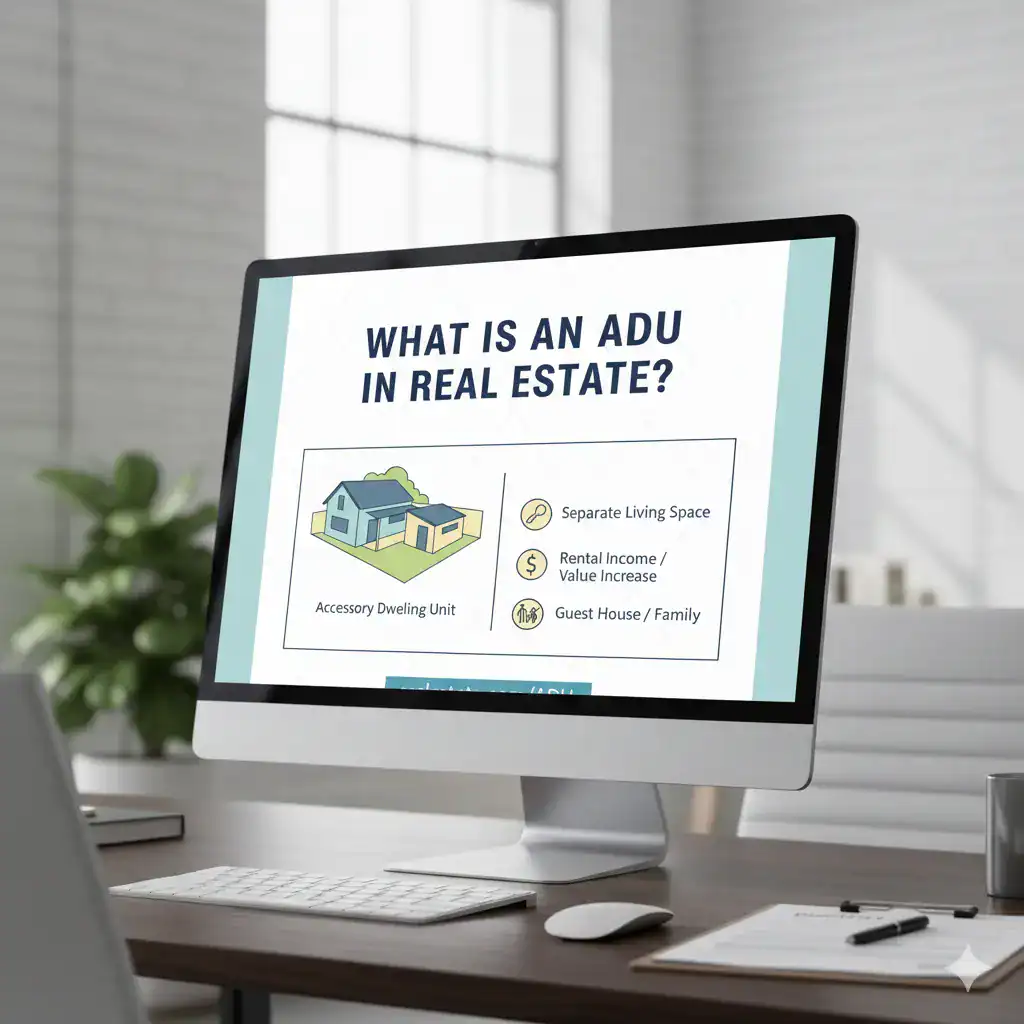
Let’s start with the simple definition. ADU stands for Accessory Dwelling Unit.
An ADU is a secondary housing unit on a single-family residential lot. It can be considered a smaller, self-sufficient home that occupies the same land with the bigger, main house.
Most of the time, a building will be officially recognized as an ADU home if it has the following three components:
- Sleeping area.
- Cooking area (kitchen or kitchenette).
- Washing area (bathroom).
Without a kitchen, the city might just label the room with a bed as a "guest house" or "studio." But when you put in a stove and a sink, you are now in the realm of ADU real estate.

You might know these units by other names. People often call them in-law suites, granny flats, backyard cottages, or casitas. No matter the nickname, the ADU meaning remains the same: it is a complete, separate living space on your own property.
The Different Types of ADUs
Not all ADUs look the same. Depending on your lot size, your budget, and your local laws, you might choose a different style. Here are the most common types of secondary housing units you will see in 2026.
- Detached ADU
This is what most people picture. A detached ADU is a standalone structure built in the backyard. It is completely separate from the main house. These offer the most privacy for both the homeowner and the tenant. However, they are often the most expensive to build because you are starting from scratch with a new foundation and walls.
- Attached ADU
An attached ADU is connected to the main house. It might share a wall with the living room or be built as a second-story addition. This can sometimes be cheaper than a detached unit since you can tap into existing utility lines more easily.
- Garage Conversion ADU
This is a huge trend right now. A garage conversion ADU takes your existing car garage and turns it into a living space. Since the roof, walls, and floor are already there, this is often one of the most affordable ways to build. You trade your parking spot for rental income.
- Junior ADU (JADU)
A JADU is a smaller version, usually created within the walls of the existing home. Think of turning a spare bedroom into a small studio with a private entrance and a kitchenette. These are usually limited to 500 square feet.
Why Everyone Is Talking About ADUs in 2026 (The Pros)
So, why is everyone suddenly obsessed with accessory dwelling unit explained guides? It is not just a fad. There are real, tangible benefits of accessory dwelling units that are driving this boom.
Passive Income Generator
Let’s be real, money talks. The biggest draw for most people is ADU rental income. By renting out your backyard unit, you can generate hundreds, maybe thousands, of dollars a month. In expensive cities, this rent can cover a huge chunk of your mortgage. It is one of the smartest passive income real estate ideas out there right now.
Property Value Boost
Does an ADU add value? Absolutely. In many markets, the ADU property value impact is significant. Buyers in 2026 are looking for flexible spaces. They want a home office, a place for Mom, or a way to offset high interest rates with rental income. Having a permitted ADU makes your home stand out and sell for more.
Multi-Generational Housing
Nursing homes are expensive and often lonely. Multi-generational housing is making a comeback. An ADU allows aging parents to live close to their grandkids while still maintaining their independence. It is the modern version of the "in-law suite."
Helping the Housing Shortage
We have a lack of homes in this country. ADUs are affordable housing solutions that do not require building huge new apartment complexes. They use land that is already there. This is why cities love them and are actively encouraging urban infill housing.
The Cons of Building an ADU
Before you run to Home Depot, we need to talk about the ADU pros and cons honestly. It is not an easy road.
The Sticker Shock (Cost)
ADU construction cost is the biggest hurdle. Even a garage conversion can cost over $100,000 in 2026. Financing this can be tricky since you cannot always get a traditional mortgage for it. You might need a construction loan or a home equity line of credit.
Loss of Backyard Space
Say goodbye to your big lawn. A detached ADU will eat up a significant portion of your yard. If you love gardening or have kids who run around, this is a serious trade-off.
Becoming a Landlord
If you rent it out, you are now a landlord. That means fixing toilets at midnight, dealing with tenant disputes, and managing leases. It is not "free money"; you have to work for it.
Property Tax Increases
When you build an ADU, your property taxes will likely go up. The assessor will add the value of the new structure to your total assessment. It won't trigger a reassessment of your whole property in most places (like California), but your annual bill will increase.
ADU Construction Costs
Let’s talk numbers. What is a ADU home going to cost you? Prices vary wildly by state and finish level, but here are some 2026 estimates to keep in mind.
On average, ADU construction costs between $150 and $600 per square foot.
For a standard detached unit, you might spend anywhere from $112,000 to $285,000. A garage conversion is usually cheaper, averaging around $142,000, though simple ones can be done for under $100k if you are handy.
Where does the money go?
- Site Prep & Foundation:$5,000 - $15,000
- Utilities (Plumbing/Electric):$10,000 - $30,000
- Framing & Roofing:$20,000 - $50,000
- Permits & Fees:$5,000 - $20,000 (City dependent)
Remember, these are just estimates. If you want luxury finishes or have a sloped lot, the price goes up fast. It is a major ADU real estate investment.
Navigating ADU Zoning Laws (California, Texas, and More)
The rules for building secondary housing units change from town to town. You need to check your local ADU zoning laws before you spend a dime.
California ADU Rules
California is the leader in the ADU housing trend. The state has passed laws to make it easier. For example, recent updates in 2026 continue to limit how much cities can charge for impact fees on units under 750 square feet.
Let's break down the case of City of Moorpark ADU requirements to understand it better. If your property is in Moorpark, you can usually have one ADU (Accessory Dwelling Unit) and one JADU (Junior Accessory Dwelling Unit) per single-family lot. Also, they stipulate that the new dwelling must be at least 4 feet from the property lines, and the maximum size is typically limited to 1,200 square feet. This is pretty much in line with what the majority of other cities in California are doing.
ADU Texas
ADU Texas laws are a bit different. While cities like Austin are becoming very ADU-friendly to fight density issues, the state as a whole is less regulated than California. In Texas, you often have more freedom with design, but you still must adhere to strict HOA rules, which can sometimes ban backyard units entirely.
ADU Laws by State
Always check if your state allows "by-right" building. This means if you meet the code, the city must approve you. If you need a "discretionary" review, your neighbors could block your project.
Is an ADU a Smart Real Estate Investment?
Is it worth it? For most people, yes. ADU real estate is one of the few improvements that actually pays you back every month.
If you spend $200,000 building a unit that rents for $2,000 a month, you are looking at a gross return of $24,000 a year. That is a solid 12% return on your cash, not counting the increase in your property's resale value.
Investors love this strategy. It is part of the move toward smart real estate investments where density equals dollars.
If managing a construction project sounds like a nightmare, you can sell your property as-is. Companies like Bama Home Buyer specialize in buying homes quickly, regardless of their potential or condition.
Step-by-Step: How to Plan Your ADU Construction
Ready to build? Here is a simple roadmap.
- Feasibility Study:check your yard. Where are the sewer lines? Is there a slope? Can a fire truck get close enough?
- Design & Floor Plans:You need accessory dwelling unit floor plans. You can hire an architect or buy pre-made plans online to save money. Keep the layout simple.
- Permits:Submit your plans to the city. Be patient. This can take months.
- Construction:Hiring a general contractor is usually best unless you are a pro. Expect noise and dust for 4 to 6 months.
- Final Inspection:The city signs off, and you get your Certificate of Occupancy. Now you can move in or rent it out.
ADU vs Guest House
People often confuse ADU vs guest house. The main difference is the kitchen. A guest house usually does not have a full cooking range (stove/oven) permitted for permanent living. An ADU is a legal, independent dwelling where someone can live full-time, cook meals, and receive mail.
Alternatives to Building
Maybe after reading this, you are thinking, "Wow, that sounds like too much work." You are not wrong. Building is stressful.
If you have a large lot but no cash or energy to build, you might consider selling the property to an investor who can develop it. This releases your equity without the construction headache.
It is always good to know your options. Whether you build for sustainable housing development or decide to sell to a trusted local buyer like Bama Home Buyer, the equity in your land is valuable.
Final Words
It is more than just a room. It is a powerful tool for wealth, family, and housing.
Whether you are looking into backyard rental units for extra cash or a safe home for an aging parent, ADUs offer flexibility that a standard home cannot. Yes, the ADU construction process is pricey and full of paperwork, but the long-term payoff is hard to ignore.
As single-family zoning changes across the US, we are going to see more of these small homes. They are the future of the American backyard. If you have the space and the budget, 2026 might be the perfect year to break ground.